How to Optimise Your Hotel Room for Better Sleep
Your sleep doesn’t start in bed. It starts the moment you enter the hotel room.
Studies looking at hotel sleep consistently find that it’s often not the bed that disrupts rest most; it’s the environment. Noise (especially from air conditioning or outside the room), followed by temperature control and light intrusion, are among the biggest contributors to poor sleep.
And when we add the number of different hotel rooms many of us rotate through in a single month (my fellow Platinum, Titanium and Ambassador members - I hear you), it becomes easier to understand why sleep can feel inconsistent on the road.
Important: I’m here to give you tools, not rigid rules. I want to give you the scientific reason behind these tools, because once you understand how sleep actually works, it becomes much easier to adjust things to your own needs and stick with what helps.
So let’s look at what we can improve.
Noise
Sometimes there truly isn’t much you can do. I’ve stayed in hotels where events were running downstairs, and the whole building felt like it was vibrating with music.
But there are small things worth doing early. When you enter the room, pause and listen.
Check the A/C noise. Notice the room location and outside exposure. Proximity of the elevator, ice machine and housekeeping room. If it already sounds like it might be noisy, politely ask reception to change rooms. It’s far easier to do this on arrival than at 2 am.
If changing rooms isn’t possible, earplugs can help enormously. There are many options on the market - it may take trying a few to find what suits you. They can feel strange at first, especially if you’ve never used them, but they’re often worth it.
Temperature
If there is one thing to take away from this post, let it be this:
We warm up to cool down to fall asleep. We stay cool to stay asleep. And we warm up to wake up.
Let me explain.
To fall asleep, the body needs to drop its core and brain temperature by about 1°C. Research suggests the ideal sleep environment is around 18–19°C - which, yes, can feel surprisingly cool.
(And to all the pilots I once judged for keeping the CRC freezing… I apologise. Apparently, you were just following science.)
How the body cools itself
When we lie down, blood flow shifts toward the hands, feet, and face. These outer surfaces release heat, allowing the core body temperature to drop, which supports sleep onset.
That’s why warmer hands and feet often mean falling asleep faster. Socks may not win any style awards in bed, but they’re surprisingly good at helping falling asleep.
Taking a warm shower or bath before bed also helps because it causes vasodilation - blood vessels near the skin expand, heat moves outward, and once you step out of the bath, the body experiences a drop in core temperature.
Plus, it’s relaxing. It signals the nervous system that the day is over.
On the flip side, environmental sleep research shows that warm environments increase wakefulness and can lengthen the time needed to fall asleep.
Light
Light is one of the strongest signals to the brain about whether it’s time to be awake or asleep. Circadian research shows that light exposure can shift the body’s internal clock, influencing when we feel alert and when sleep becomes possible.
Blue and green light from screens, LEDs, or bright artificial lighting can delay circadian timing and suppress melatonin, especially when exposure happens in the evening.
Simple hotel room adjustments:
Dim all the lights in the last hour before bed if possible
Close blackout curtains fully (use hangers or hair clips if they don’t seal properly)
Cover bright LEDs if they shine toward the bed (TV light, alarm clock on your bedside table)
Use an extra pillow or blanket to seal the gap between the entrance door and the corridor
Use an eye mask
If you wake at night to use the bathroom, consider using your phone flashlight instead of switching on full overhead lighting, that will help you see just enough.
What if sleep doesn’t come?
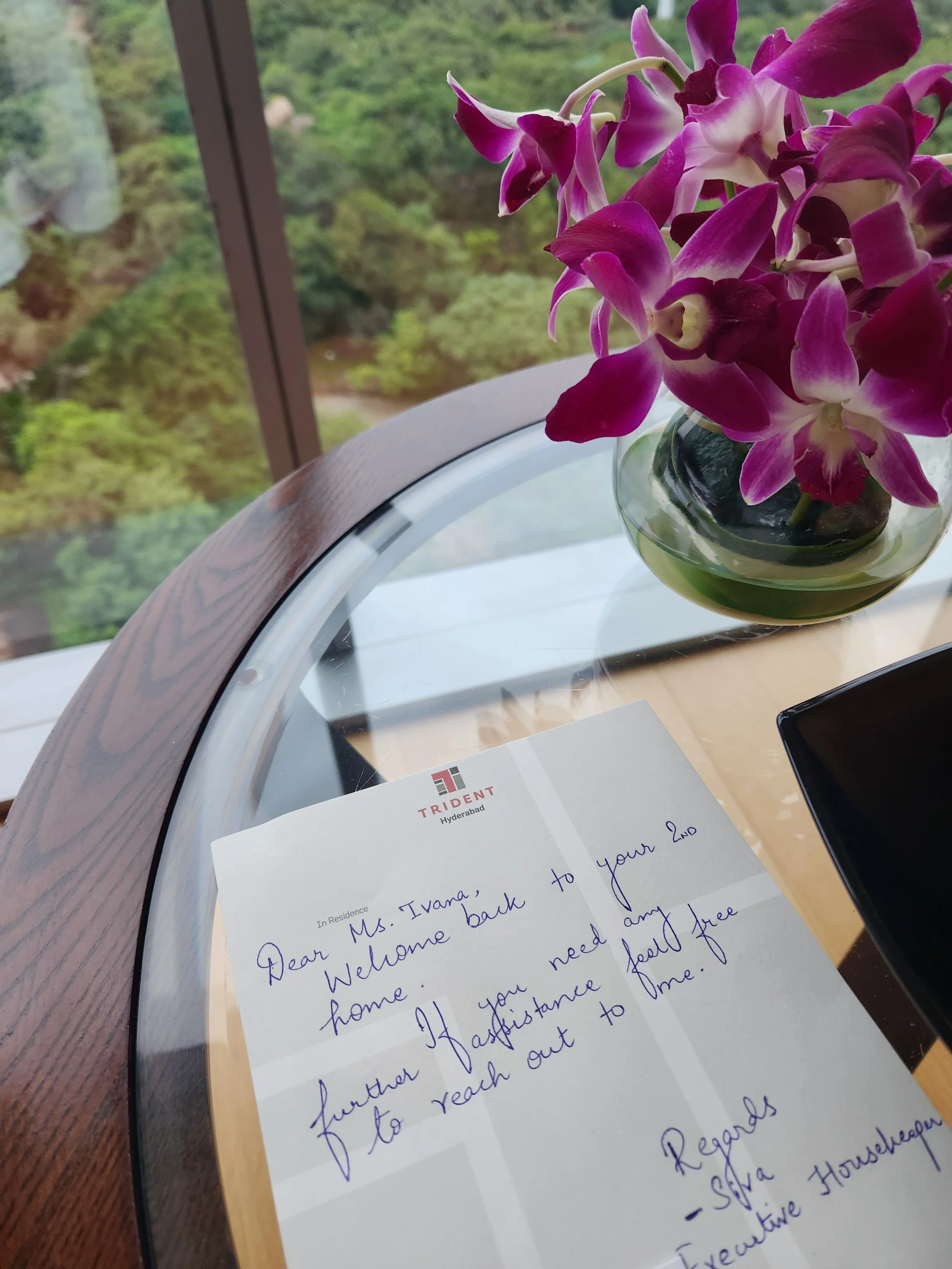
Hotel rooms sometimes become our second home, and kind hotel staff are what make the stay truly memorable.
If you’ve been awake in bed for about 25-30 minutes, it’s usually better to get up, move to a chair or sofa, keep the lighting low, and do something calm like reading or listening to a podcast. Avoid eating, checking emails, or scrolling. Return to bed only when you feel sleepy again.
Sleep researcher Matthew Walker explains that the brain learns associations quickly. If we regularly lie awake in bed, the brain can start linking the bed with wakefulness instead of sleep.
This matters even more in hotel rooms, where the environment is unfamiliar and doesn’t yet carry strong “sleep associations.”
Keep the mind occupied
One of the hardest parts of trying to sleep is that the mind suddenly decides it’s the perfect time to review life decisions, tomorrow’s flight, and conversations from three years ago.
We can’t force sleep. But we can give our mind something neutral enough that it stops spiralling.
Guided meditation, breathing exercises, or body scans can help.
But if meditation isn’t your thing, don’t count sheep. Take a mental walk instead. Yes, you heard that right.
Research from Oxford University found that people who imagined calming scenes or familiar journeys fell asleep faster than those using simple repetitive strategies like counting sheep.
Try mentally walking a familiar route: putting your shoes on, leaving your apartment, pressing the elevator button, hearing the doors open, stepping outside, and continuing along your usual path, imagining it slowly and in as much detail as possible. The point is to move attention away from anxious thoughts so the brain can drift.
Avoid clock-watching
If you wake during the night, try not to check the time. Seeing “2:07am” often creates more stress than information. Then it’s “3:42am”, and suddenly the night feels like a countdown to exhaustion. If possible, turn the clock away or cover it.
Phone boundaries (when realistic)
Phones can create low-level anticipatory alertness - even when silent.
I understand this isn’t always possible. For years, working with heads of state and UHNW principals, my phone simply couldn’t be on silent.
But when you are off duty, reducing overnight alerts can help the nervous system settle.
A note on caffeine and alcohol
Both deserve their own discussion, and I’ve covered them in separate blog posts.
In brief, caffeine can keep the nervous system more alert than we realise, sometimes making it harder to fall asleep even when the body feels tired. Alcohol, on the other hand, may seem to help at first, but often leads to more fragmented sleep and lighter recovery later in the night.
When it’s more than the environment
If sleep difficulties are persistent - loud snoring, suspected sleep apnea, chronic insomnia, or constant fatigue, environmental tweaks alone may not be enough. That’s worth discussing with a healthcare professional.
You don’t need a perfect routine or a perfect hotel room. Often, a few small adjustments are enough for your body to relax and recognise the signal: We’re safe. We’re off duty. Now we rest.
Sleep well.
Ivana