The Pressure of Having It All Together
Hotel room in Glasgow.
A text message from my mum: Grandpa just passed away.
The room phone rings.
“This is your wake-up call.”
The crew bus is leaving in an hour.
I sit on the edge of the bed, reapplying my makeup as the tears come again and again. I pause, breathe, and try once more. The uniform is waiting. I have to get it together. I have to push through this sector.
This moment will feel familiar to many in aviation. Personal life doesn’t pause, yet from the very start we learn to leave it outside the aircraft door, to show up, smile, and carry on as if nothing else exists.
When you put the uniform on, personal worries are muted in the background, emotions are contained, and professionalism takes the lead. You are trained to be composed, reassuring, precise, and calm, even when your own inner world is falling apart.
There is rarely space to feel how you actually feel, especially on long flights or multi-sectors. The job continues, the smile remains, and the responsibility does not pause.
You learn to function while exhausted, to stay warm and polite while emotionally drained, to make decisions while carrying more than is visible. You keep going even when parts of your own life feel fragile or unresolved.
Birthdays, weddings, funerals, holidays, anniversaries - moments that don’t repeat have passed without me there. Was it worth it to miss any of those moments? Absolutely not!
And still, I love this job.
That is the paradox.
We love flying. We love the teamwork, the rhythm, the responsibility, the sense of purpose. We love taking care of others. And yet, the same job can leave very little room to be fully human within it.
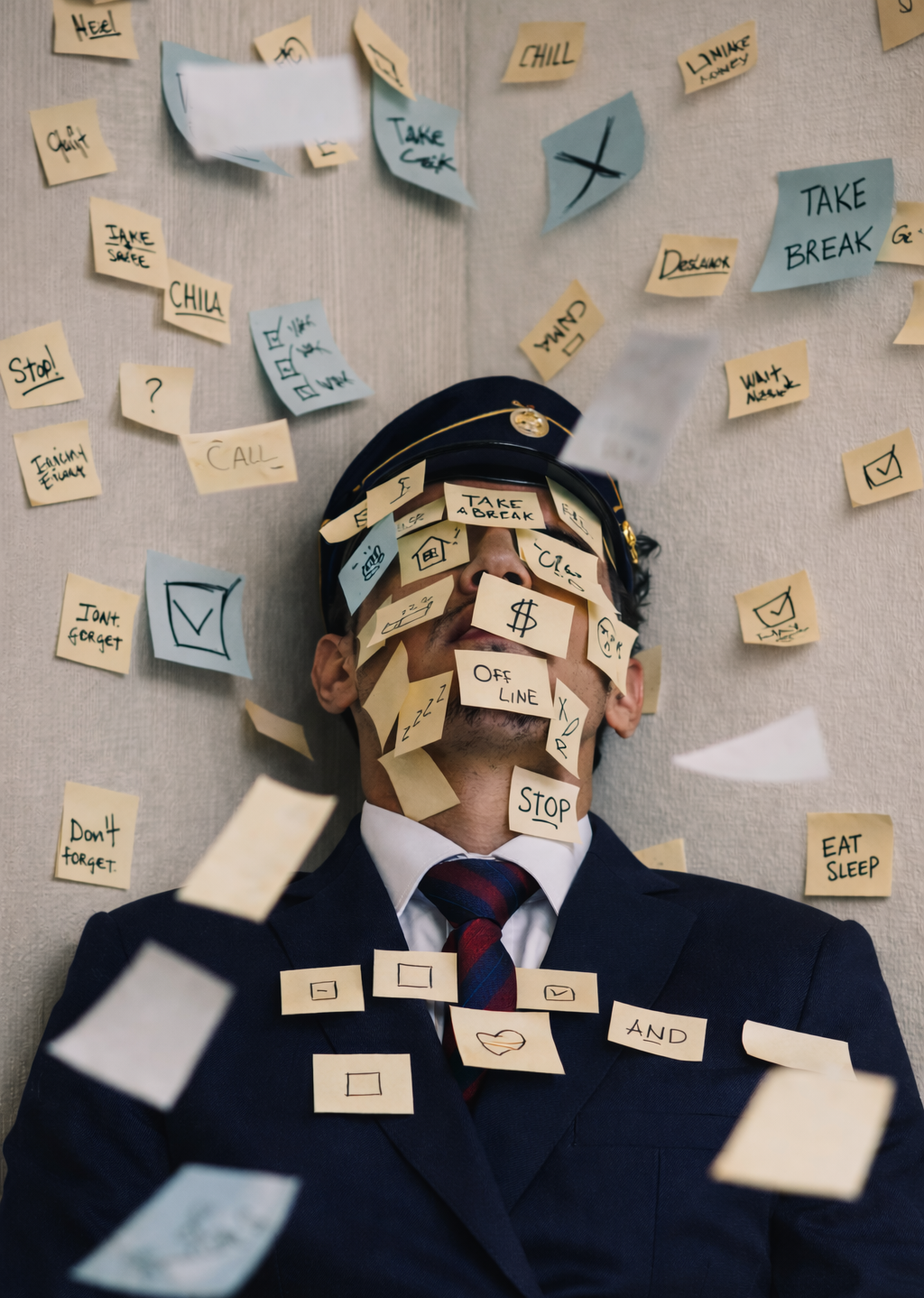
Personal life doesn’t pause, yet from the very start we learn to leave it outside the aircraft door, to show up, smile, and carry on as if nothing else exists
So, where do the parts of ourselves go when we are not okay?
How do you comfort yourself when you are surrounded by hundreds of passengers and working alongside colleagues you may have only just met? How do you say, even internally, I am not okay right now?
Most of the time, you don’t.
You compartmentalise. You push through. You promise yourself you will deal with it later.
Guess what?
Most of the time, you don’t.
This is where conversations about support often go wrong.
Pilots and cabin crew don’t want to be told to “open up,” sent to another webinar, or offered generic wellbeing slogans. Being told to sleep more, stress less, or be more resilient ignores the reality of rosters, night flights, and operational pressure, and in the end, the crew is left to manage themselves the best way they can.
And don’t get me started on the fear woven into conversations about crew wellbeing - often tied to the risk of losing a job, making even talking about it feel unsafe or stigmatised.
What support actually feels like is different.
It feels like being allowed to be human without consequence, in an environment that already asks a great deal. It means recognising that most days crew go above and beyond, and that there are days when meeting the standard is enough. And on some days, even that may not be possible. And on those days, choosing not to fly can be the most responsible decision, for safety and for health. What works on paper (scheduling software) does not always work for humans, no matter how sophisticated these softwares are.
Acknowledging this does not mean lowering standards. That is how people meet them - sustainably.
Safety sits at the core of aviation, and that should never change. But behind the uniform, there is still a nervous system, a body, a mind, and a life that does not pause simply because a flight is scheduled.
Crew wellbeing begins with permission.
Permission to recognise strain, to acknowledge that loving the job does not make it easy, and to accept that strength and vulnerability can exist at the same time.
Because the pressure to always be okay, without space to ever not be, slowly takes something from even the most capable professionals.
So let me say it loud and clear:
Aviation doesn’t lack strong people.
It lacks systems that allow strong people to remain human.
Be well. And if you are not well right now, that is ok, too.
Ivana