Crew Meals: Serving the System or the Crew?
One of the longest debates among the crew is the quality of crew meals. More often than not, crew meals on board are not the most appealing option for those who actually eat them day after day. In most airlines I worked for, crew meals are essentially an extra passenger meal or a small variation of it, with the same level of quality and quantity. If you are a pilot or a cabin crew member working in first or business class, you may occasionally be lucky enough to receive a premium cabin meal, which often feels like a step up in quality and presentation.
So, how are crew meals actually made?
Only facts, no myths, no stories whispered in galleys.
I had the opportunity to tour two large airline catering units in the Middle East, and that experience alone deserves its own chapter. Those facilities are a world of their own. Walking through them gives you a completely different perspective on how much planning, structure, and attention goes into every single item placed on a tray. Meals are cooked, rapidly chilled or frozen, and handled under extremely strict food safety systems. Everything follows documented procedures around temperature control, hygiene, storage, and transport. I did not see preservatives being added into food during preparation. And yes, I can confirm that omelettes are made from real eggs. No powder, no science experiment. One of the longest-running galley myths can officially retire.
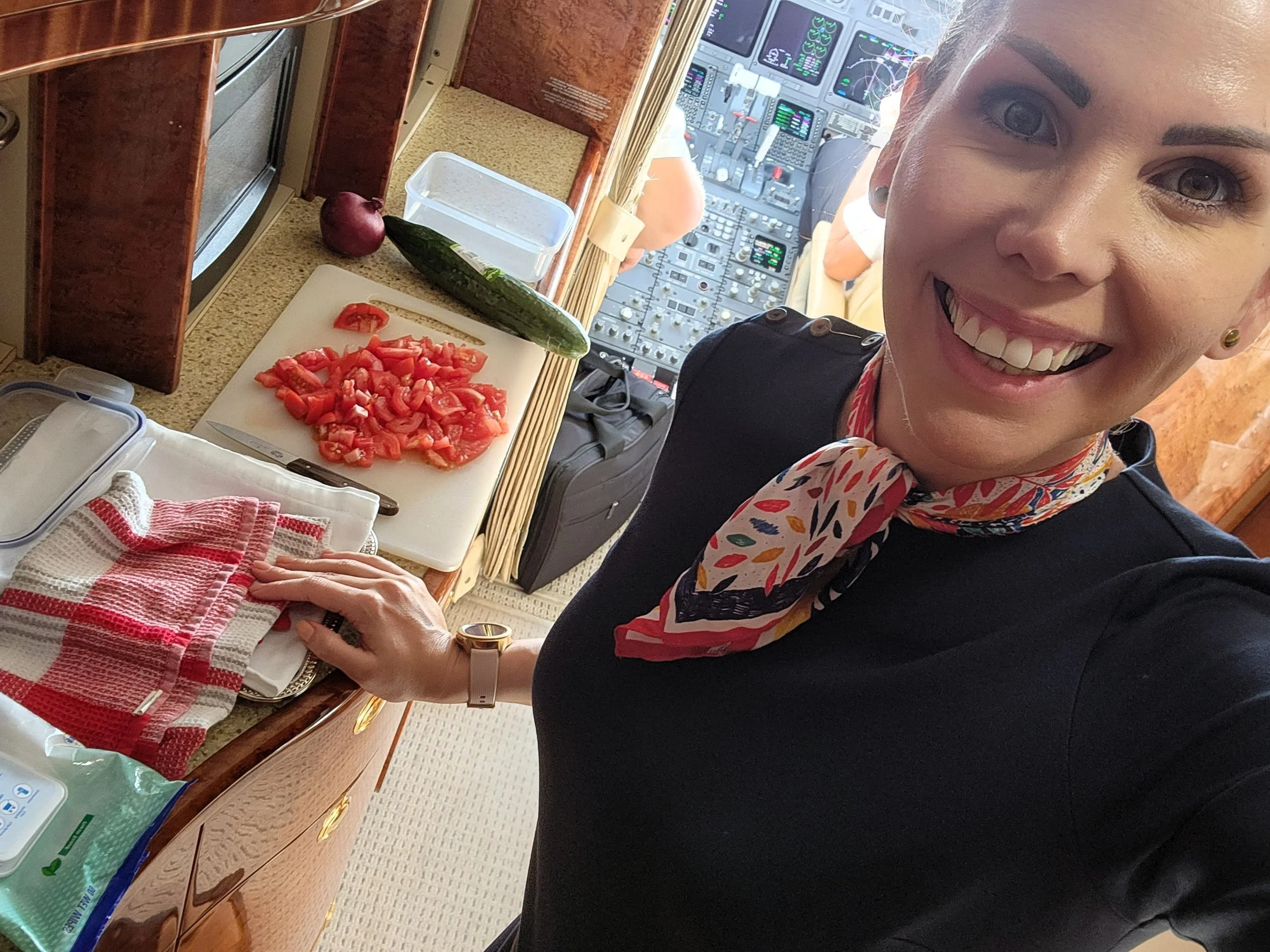
A health-conscious principal means salads made from scratch for everyone
In private aviation, the picture changes. Caterers are usually smaller, more bespoke, and far more flexible. Freshness and ingredient quality are prioritised, and meals are often tailored to the client or the crew. I frequently sourced food from high-end restaurants, including Michelin-star kitchens, and that is a completely different ball game altogether. The scale is smaller, expectations are different, and budgets allow for a level of flexibility that commercial aviation simply cannot match. Sometimes, the crew will prepare food on board from scratch for the principal.
Now let’s come back to reality. Millions of airline meals are served every single day across the world, and that fact alone tells us one thing clearly: they are safe to eat. The real question appears when you are eating that meal fifteen or more times a month.
If you are a health-conscious person, this is where it becomes worth pausing and looking a little deeper.
A typical crew meal tends to be high in sodium. This is not accidental; taste perception changes in flight, something I will explore in a separate blog. Lower cabin pressure, dry air, and noise all dull our sense of taste, so meals are seasoned more assertively to still register as flavourful while in-flight. Over time, repeated high sodium intake can contribute to bloating, thirst, fluid retention, and, for some people, blood pressure concerns.
Sugar is another quiet guest. Not always obvious, not always in desserts, but often hidden in sauces, dressings, yoghurts, or snack items. Sugar improves palatability and shelf stability, but when consumed frequently, it can lead to energy highs followed by crashes, especially in an environment already demanding a lot from the body.
Fibre is usually present in minimal quantities. Meals are often built around refined carbohydrates like white rice, pasta, and bread rolls, with relatively small portions of vegetables. Fiber plays a key role in digestion, satiety, and gut health, all of which are already challenged by long hours of sitting, dehydration, and disrupted sleep patterns.
Then there are saturated fats. Creamy sauces, cheese, and certain processed proteins make meals more satisfying and more stable during reheating, but they also make digestion heavier, particularly when movement is limited and the body is already under stress.
None of this makes airline food bad or wrong. It makes it practical, scalable, and suitable for mass catering. The challenge comes from frequency.
With that in mind, it is worth reconsidering what we eat on board every day. Crew feedback on meal quality is important and should always continue. At the same time, I want to share the backstory. Behind those trays are people in airline offices who genuinely care about crew wellbeing and performance. I was one of them. Those conversations and negotiations are not easy. Nutrition, safety, cost, logistics, and consistency all collide in one place. More often than not, decisions come down to numbers. Crew meals must stay within fixed budgets, and those budgets directly limit ingredient quality and variety. It really is that simple.
So if that is the system, perhaps the change begins with how we think about it. Would you allow a system where money is the main deciding factor to choose what you eat half of the month?
Or would you rather take some ownership of that choice?
What if we, as crew, bring more of our own simple yet nourishing snacks? What if we stop relying entirely on the crew meal tray to fuel our bodies?
Challenging the system and taking care of yourself are not opposing ideas. They belong together. And taking responsibility for your own health is one of the most empowering choices you can make.
Stay noursihed.
Ivana