You Meant Well. But Your Body Is Still Catching Up
Understanding what your body gives up when you donate blood
Being a blood donor is, without question, an incredible thing to do. It is generous, it is selfless, and it can literally save someone’s life, and that part deserves to be said clearly before anything else. But if you are crew, there is another side to this conversation that rarely gets explained properly, even though it directly affects how you feel and how you function at work.
If you have ever looked at the OM-A, section Crew Health, you have probably seen that blood donation is not forbidden, but rather “not recommended,” with the usual advice being to allow a few days off after donating. On the surface, that sounds reasonable and responsible, but it skips over the most important part of the conversation, which is what your body is actually working with before you even get to the donation chair.
An average adult has around four and a half to five and a half litres of blood, and during a standard donation, roughly 450 to 500 millilitres are taken, which means that (from a purely volume perspective) the body can tolerate it. But the real story is not about the volume; it is about what is carried within that blood. Your red blood cells are responsible for transporting oxygen from your lungs to every single tissue in your body, and they do that using haemoglobin, which you can think of as the bus with seats where oxygen sits in. When you donate blood, you are reducing the number of those seats, and even though your body begins to compensate, for a period of time, there is simply less oxygen being delivered around your system.
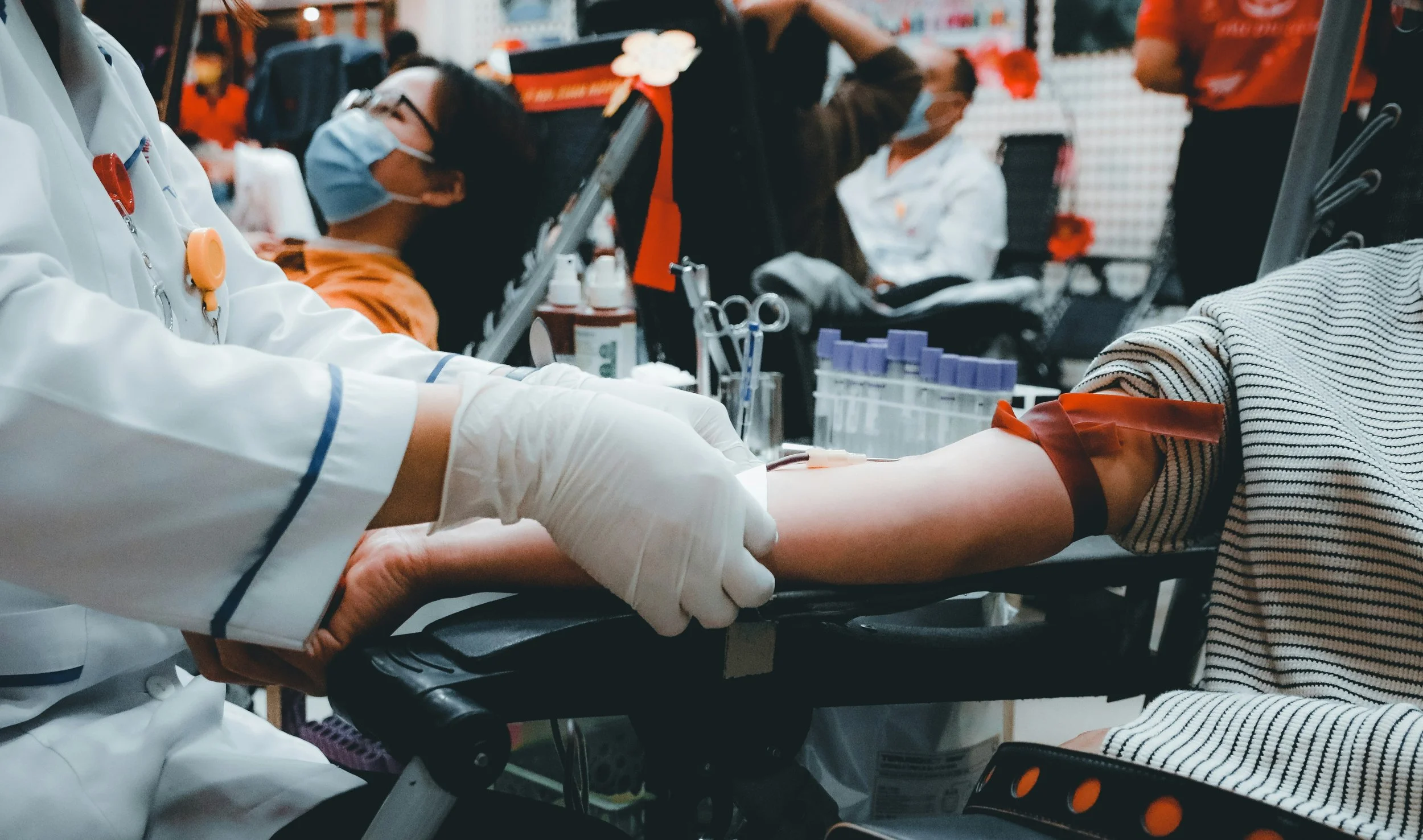
Being a blood donor is incredible. Knowing your health baseline before you do it is essential.
The fluid part of your blood comes back quite quickly. But rebuilding red blood cells takes longer. It can take weeks, sometimes even a few months, to get back to where you were before. And that is where iron comes into the picture, because without enough iron, your body cannot effectively rebuild those cells. Most people think of iron only in terms of what is circulating in the blood, but there is also ferritin, which is your storage form of iron, your reserve that your body draws from your cells (liver, bone marrow, spleen) when it needs to produce more red blood cells. Many crew, and especially female crew, are already operating with lower ferritin levels without necessarily being aware of it, so when blood is donated, it is not just a temporary dip in blood volume; it is also a withdrawal from a reserve that may not have been particularly full to begin with.
This is why the effects do not always present as something obvious, but rather as that familiar feeling of being a little more tired than expected, needing more caffeine than usual, noticing that your thinking is not as sharp or your reactions not as quick, or that everything simply takes a bit more effort than it should. You can still do the job, you can still show up, but you are doing it from a slightly lower baseline, and in a role that already demands a lot from your body through disrupted sleep, long duty periods, constant alertness and decision-making; even a small drop in that baseline can be felt.
So when we come back to the original recommendation to take a few days off, it is not wrong, but it is incomplete; because recovery is not just about resting for a couple of days, it is about how well your body can rebuild. Supporting your body after donating becomes essential, which means staying well hydrated to help restore blood volume, focusing on nutrient-dense foods that provide iron and support its absorption, such as combining iron-rich foods with vitamin C, allowing yourself proper rest even if sleep is not perfect, and, where appropriate, discussing supplementation with a healthcare professional if your levels are low or borderline.
At the end of the day, this is not about telling you what to do. It is a personal decision, and everyone should make it for themselves. But it is a decision that deserves to be made with a clear understanding of how your body actually works, especially in a job where your physiology is already under constant demand.
You can care deeply for others and take care of yourself at the same time. These two go together. And when you do, you show up with the energy and focus this role truly asks of you.
Ivana