Who Are You When You’re Not Flying?
If someone asked you, “Who are you?” what would you say?
For many of us in aviation, the answer comes out before we even think about it, it’s almost instinct.
I’m a pilot.
I’m a cabin crew.
It’s not just a job description. It carries pride, responsibility, and belonging. When something shapes your sleep, your holidays, and your relationships, it stops being just a job and becomes part of who you are.
The uniform gives clarity. You know how to stand inside it. You know what is expected of you.
Then the uniform comes off, and stepping out of that role doesn’t always happen easily. The boundaries between work and personal life blur in ways you don’t fully notice until they start shaping how you show up for the people closest to you.
One of the hardest parts of aviation that rarely gets spoken about is what happens to relationships outside of it.
Working in private aviation, for government entities and royal family members, I lived on 24/7 standby. Flights appeared and disappeared without warning. Plans were always provisional. I cancelled on friends more times than I can count.
Once, I was at the cinema with a friend when my phone rang. I knew immediately I had to answer. It was rostering. My flight had been moved forward. Instead of tomorrow morning, I was departing that same evening.
So yes, I became that person. The one answering a phone in the middle of a movie. I remember whispering apologies to my friend, feeling the eyes of people around me. When I stood up to leave halfway through the film, I could almost feel the collective disapproval following me out. I was so embarrassed. I never went back to that cinema again.
The moment that stayed with me most, though, was when my brother came to visit. There were no flights scheduled. I picked him up from the airport, feeling relieved that I could finally be present. That same evening, the phone rang. The principal had changed his mind. The other flight attendant didn’t have the visa for the destination. I had to go.
I remember packing my suitcase with tears running down my face (and saying a few other words which I will leave out). I felt torn between duty and the simple human wish to stay. It takes a deeply caring family to understand that sometimes you leave not because you want to, but because the job asks it of you.
This way of living leaves marks on your relationships.
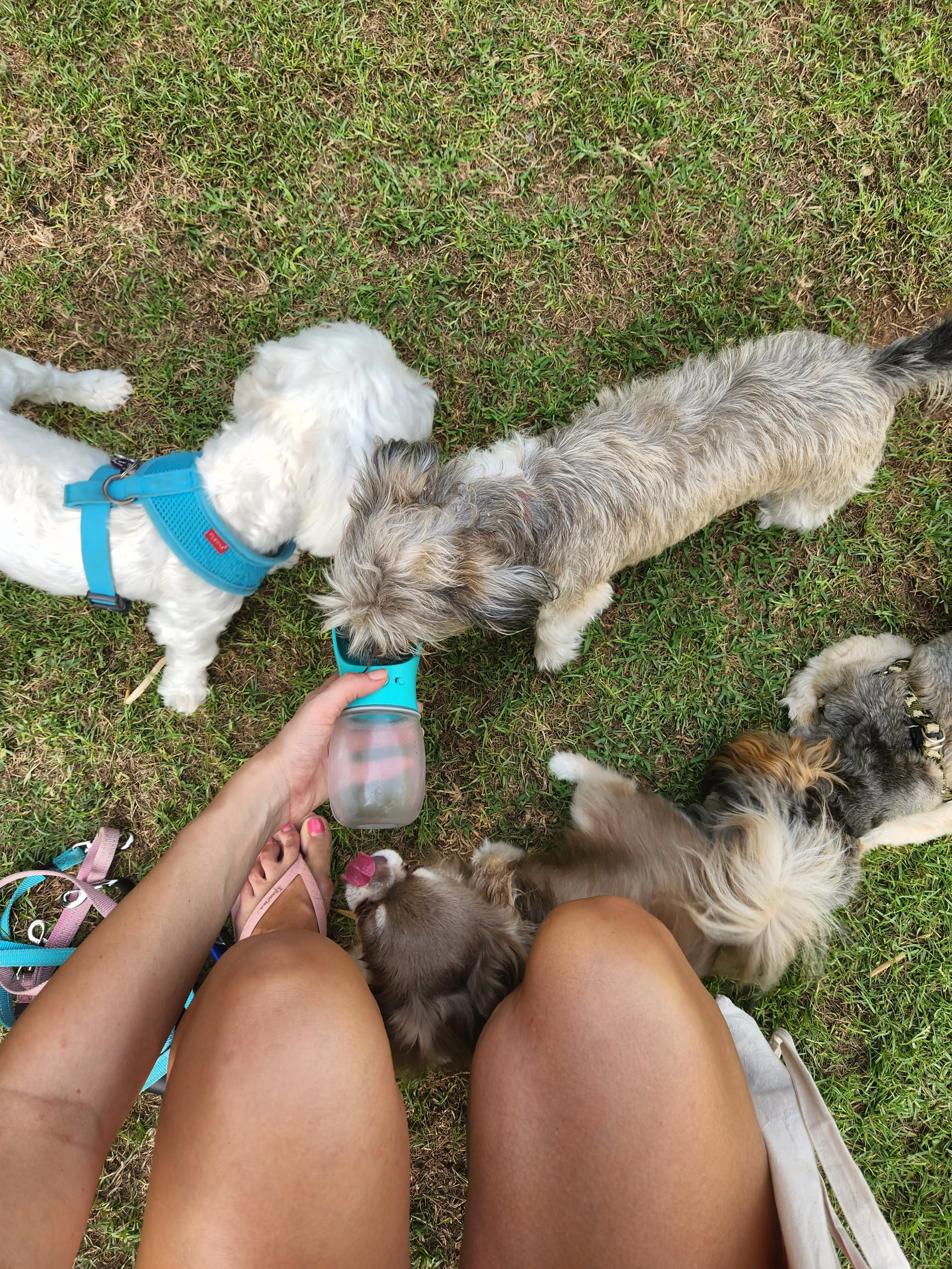
The coolest gang to be around on my days off: Bruno, Camo, Pancho and Bear
After long rotations, sometimes a month being away, I often felt like I had to resuscitate my social life from scratch. People continued living. Of course, they had. Their days were filled with routines, conversations, and shared moments I wasn’t part of. There’s a strange feeling in stepping back into a circle that moved while you were away and wondering where exactly you fit again.
It creates an unsettling feeling: that if you disappear often enough, people will forget to look for you.
That’s why friendships outside aviation aren’t optional extras; they’re anchors.
Non-aviation friends may not fully understand the fatigue after a trip, or why a WhatsApp message is seen but unanswered for days. They may never grasp the logistics or pressures of the job. But they offer something equally important: perspective. They remind you that there is a world untouched by rosters and reporting times. A world where you are known not as crew, but as yourself.
Keeping those connections alive requires effort. It asks for patience on both sides. But it is profoundly healthy. These relationships ground you. They create continuity when work feels transient. They hold a version of you that exists beyond the uniform, a version that is just as real and deserving of attention.
We’re used to handling complexity, stepping into new environments, and staying calm when things get intense. Those parts of us don’t vanish when the aircraft door closes. And when even a small piece of that energy is poured into life on the ground - into family, friendships, and the things that make us feel like ourselves - life starts to feel fuller in a way that’s hard to explain but easy to recognise.
Perhaps the goal isn’t to separate the flying self from the personal self. It’s to let them support each other.
You are the person who flies.
And you are also the person who laughs with friends, reconnects after absences, nurtures relationships, and builds a life that exists both above the clouds and firmly on the ground.
Both versions of you can exist at the same time. And when they do, the question “Who are you?” stops feeling like it needs a single answer. It stretches enough to hold all the parts of you, not just the one in uniform.
Because the more life you build on the ground, the more fully you get to show up in the air as yourself.
Be yourself.
Ivana